
Car Drifting and Driving Games
Elegant gamesRole Playing
4.7313.00 Reviews
- Version
- 3.6.0
- Installs
- 10.00M
- Age Rating
- Teen
Screenshots
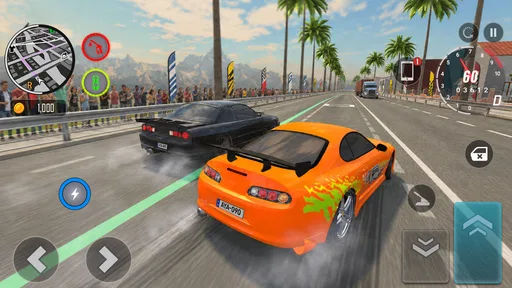
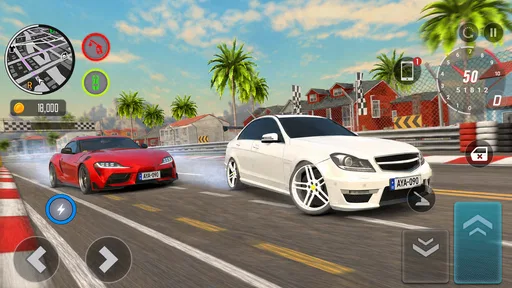


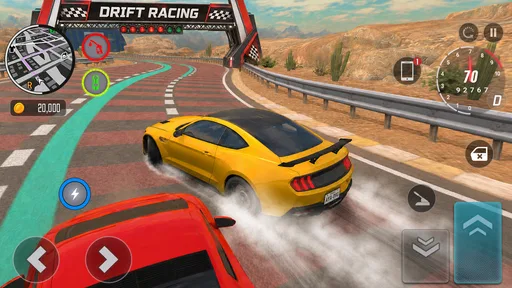
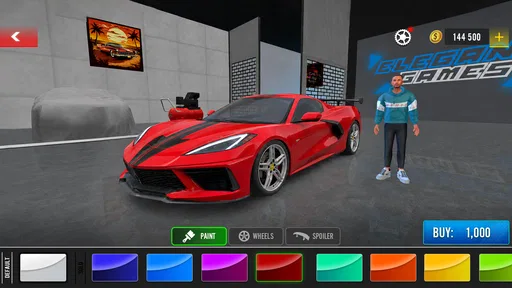
Our Review of Car Drifting and Driving Games
 Analysis by Appyee
I spent time with Car Drifting and Driving Games as a casual role-playing driving game, and my first impression was clear: it is built around the simple satisfaction of controlling a car, practicing slides, and improving through repetition. That sounds straightforward, but it gives the game a particular appeal. It is not trying to be a serious racing simulator in the way a dedicated motorsport title might be. Instead, it focuses on the hands-on feeling of drifting and driving, making it easy to pick up when I want a short session without committing to a complicated career structure.
The game comes from Elegant games and is free to access. That matters when judging its value. I can try the driving without paying an entry fee, so the decision is less about whether it replaces a premium racing game and more about whether its central driving loop is enjoyable enough to keep installed. Its Teen content rating also makes it more suitable for older children and adults than for very young players, so I would keep that in mind before recommending it to a family.
How the driving feels in everyday play
The main attraction is the relationship between steering, throttle control, and the timing of a drift. When I approach a bend too aggressively, the car can feel difficult to settle. When I ease into the turn and correct at the right moment, the movement becomes much more satisfying. That learning curve gives the game its role-playing flavor: progress is not only about reaching a destination, but also about becoming more comfortable with the car and improving personal technique.
I found the best way to approach it was to treat each run as practice rather than as a test I had to pass immediately. Early attempts are useful for learning how much steering input the car needs and how quickly it responds when a slide begins. Instead of constantly chasing a perfect corner, I watched for the point where the car started to rotate and then tried to maintain control. That small change in mindset makes the game less frustrating and gives repeated attempts a clear purpose.
A realistic use case is a short break during a commute, between appointments, or after finishing a task at home. I can open the game, spend a few minutes working on a particular cornering habit, and stop without needing a long uninterrupted session. It also works for someone who enjoys mobile driving games but does not want to learn a large number of controls before seeing any action.
The controls are most comfortable when I focus on smooth movements instead of fast corrections. Jerking from one side to the other may seem helpful when the car begins to slide, but it usually makes the vehicle harder to predict. A better routine is to enter a turn with a plan, make a measured adjustment, and then correct only when the car has clearly moved away from the intended line. This is one of the more useful lessons the game can teach through play.
Why practice matters more than speed
Many driving games reward simply going faster, but drifting changes the priority. A controlled slide can be more satisfying than a reckless sprint because it asks me to balance momentum and direction. I began to pay attention to the exit of a corner rather than only the entry. If I entered too quickly, I might create an impressive-looking slide but lose control before the car was lined up again. Slower, cleaner approaches often produced better results.
That makes the game a reasonable introduction to the basic idea of car control for players who have never tried a drifting title. It does not require me to understand advanced racing terminology. I can learn by watching what the car does, repeating the same kind of turn, and adjusting one behavior at a time. The trade-off is that players who want instant, effortless action may find this repetition less exciting than a conventional arcade racer.
One practical tip is to avoid changing several habits at once. If I alter steering timing, speed, and braking together, I cannot tell which change helped. I get more useful feedback by keeping two parts of the approach consistent and changing only one. For example, I can use a familiar entry speed while experimenting with earlier or later steering. That turns casual play into a simple training routine rather than a series of random attempts.
Free access and what that means for value
Because the game is free, it offers an easy way to sample this style of driving without making a purchase decision first. For me, that is its strongest value argument. Someone curious about drifting can install it, learn the basic feel, and decide from personal experience whether the loop is engaging. A free game does not automatically provide better value than a paid one, but it lowers the risk of trying something that may not match my taste.
I would not describe the free price as proof that it offers more content than every paid alternative. A premium racing game may provide a deeper simulation, a broader career, or more elaborate presentation, depending on the title. The fair comparison is narrower: this game gives me a low-commitment way to practice drifting and driving, while a paid alternative may be better for someone seeking a more complete racing package.
Its audience size suggests that the concept has found plenty of interest. The game has passed 10 million installs and holds a 4.7 average from around 39 thousand ratings. Those figures make it easier for me to see the title as an established choice rather than an obscure experiment, although popularity alone does not guarantee that every player will enjoy its handling. The important question remains whether I like the feel of the car and the rhythm of repeated practice.
The current release is version 3.6.0, and the game runs on Android 7.0 or later. That makes it accessible to people using older compatible Android devices, rather than limiting the audience to recent phones. I still prefer to judge performance on the actual device I plan to use, especially with driving games where uneven responsiveness can make steering feel worse than it really is. A stable touch response is more important here than simply having a newer handset.
Where the game is useful, and where it falls short
The most convincing strength is focus. The game does not need to sell me on a complicated premise before I can enjoy a turn. I can concentrate on the car, the corner, and the small improvement I want to make. That focus is helpful for players who like skill-building loops. It also makes the title a good option when I want something more involved than an idle game but less demanding than a full racing simulation.
Another strength is the way drifting creates visible feedback. When the car rotates too far, I know I entered the maneuver poorly or corrected too late. When it holds a line, I can feel that my timing was closer to what the turn required. This immediate connection between action and result is more rewarding than a game where progress depends mostly on unlocking items or waiting for upgrades.
There is also a useful difference between playing for spectacle and playing for control. I can chase dramatic slides, but the game becomes more enjoyable when I use those slides as a way to understand the vehicle. That gives experienced arcade players a reason to refine their approach instead of treating every run as a one-time stunt. It is a small but important distinction: the game works best when I value consistency over flashy mistakes.
The limitations are just as important. This is not the right choice for someone who wants a realistic driving lesson or a substitute for learning to drive a real car. Touch controls cannot reproduce the feel of a steering wheel, pedals, or road feedback, and success in the game should not be treated as real-world driving knowledge. I would also skip it if my main interest is licensed motorsport, detailed vehicle customization, or a large competitive ecosystem. Those priorities belong more naturally to specialized racing games.
Players who dislike repetition may lose interest quickly. Improving a corner often means attempting it many times, and the satisfaction comes from gradual control rather than constant novelty. That is rewarding for me when I am in the mood to practice, but it can feel narrow when I want a changing stream of objectives. The free price makes that limitation easier to accept, yet it does not remove it.
Another trade-off is the gap between accessibility and depth. A simple driving loop is welcoming, but it may not satisfy players who want every aspect of vehicle behavior modeled in detail. I would choose this game for approachable drifting practice, not for technical realism. That distinction prevents disappointment and makes the free offering easier to evaluate honestly.
Small techniques that improve the experience
I got more from the game by choosing one type of corner and repeating it instead of constantly switching tasks. A familiar turn gives me a reference point. I can notice whether I am entering too quickly, steering too early, or allowing the rear of the car to rotate for too long. This approach is more productive than simply restarting whenever a run goes wrong.
I also recommend leaving a little room for correction. Hugging the inside of every turn may look efficient, but it leaves less space when the car begins to slide. A slightly wider line can give me time to recover and can make the car easier to position for the exit. That is not a universal rule for every situation, but it is a useful starting point when control feels unpredictable.
Short sessions work better than forcing a long grind. After many attempts, my corrections become less deliberate and I start repeating the same mistake. Taking a break and returning later can make the handling feel clearer. This is especially relevant for a game built around skill improvement: fatigue can make a control problem look like a game problem.
For a new player, I would begin by learning how the car reacts at moderate speed before trying to create the longest or most dramatic slide. Once the basic response feels familiar, I would gradually increase the challenge. That order reduces the temptation to blame the controls when the real issue is entering a turn with more momentum than I can manage.
How it compares with other mobile driving choices
Compared with a conventional arcade racer, this game puts more attention on the act of sliding and correcting a car. A standard racer may be better when I want constant overtaking, a clear finish-line objective, or a faster sense of progression. Here, the corner itself is often the main event. That makes it a better fit for someone who enjoys technique, but a weaker fit for someone who needs frequent changes in scenery and objectives.
Compared with a serious mobile simulator, it is easier to approach and less intimidating. I do not need to spend a long time learning a complex setup before I can practice. The cost of that accessibility is depth. A simulator is the better choice when realism, detailed tuning, and authentic vehicle behavior matter more than quick access to drifting.
Compared with paid games, the free entry point is the clearest advantage. I can test the central experience without paying for access. However, I would not choose it solely because it costs nothing. If I already know that I want a broad racing career or a highly detailed simulation, a free drifting-focused game may only serve as a temporary diversion. Value depends on the kind of driving I actually want, not just the absence of an upfront charge.
The game also differs from purely casual driving titles because it asks me to improve rather than simply move around. That makes it more satisfying for players who like measurable personal progress. On the other hand, someone looking for a relaxing drive with minimal failure may prefer a gentler alternative where steering errors have fewer consequences.
Who should install it?
I would recommend it to players who enjoy learning through repetition, want a free way to explore drifting, and prefer short sessions with a clear mechanical focus. It is particularly suitable for someone who sees a difficult corner as an invitation to practice rather than an annoyance. The role-playing category label makes sense in the broad sense that improvement and repeated driving give the game a progression-oriented feel, even though the central pleasure remains behind the wheel.
It is also a sensible choice for an older Android user whose device meets the minimum operating-system requirement and who wants an accessible car game. The Teen rating should guide parents and younger players when deciding whether it is appropriate. I would not recommend installing it for a very young child simply because the controls look easy; the content rating deserves attention before handing over the phone.
I would skip it if I need a realistic training tool, a full motorsport career, or a game centered on online competition. I would also move on if repeated attempts at the same driving challenge feel like work rather than entertainment. The free price makes experimentation harmless, but time is still a cost, and not every player will find enough variety in a drifting-centered loop.
For someone deciding whether to keep it, I suggest a simple test: play long enough to repeat the same kind of turn and see whether your corrections become more controlled. If that process feels satisfying, the game has probably found its audience. If you are only waiting for the next unlock, race, or dramatic event, the focused design may not hold your attention.
My final recommendation
After using it, I see this as a focused, approachable free driving game rather than an all-purpose racing replacement. Its best quality is the direct connection between practice and improvement. I can open it with a specific goal, work on smoother steering or better corner exits, and feel a difference when my timing improves. That is a meaningful experience, even though it is narrower than what a premium racing title might offer.
The limitations are easy to understand: repetition will not suit everyone, touch controls are not a substitute for real driving, and players seeking deep simulation or a broad racing structure should look elsewhere. Those are not reasons to dismiss the game; they simply define the audience more clearly. In my experience, it works when I approach it as a drifting practice game with quick, focused sessions.
With over 10 million installs, a strong 4.7 average, and free access, it is an easy recommendation for curious players who want to try this style without financial commitment. I would install it for casual drifting practice, keep my expectations away from simulator-level realism, and judge it by how much I enjoy refining the car’s movement. If controlled slides and gradual skill improvement sound more appealing than a complete racing career, this is worth trying.
Verdict
Strengths of Car Drifting and Driving Games
- Wide selection of cars with different handling and performance styles.
- Drifting controls are responsive and easy to learn for new players.
- Short races make it convenient for quick gaming sessions.
- Multiple environments provide variety beyond standard circuit tracks.
- Offline play lets you enjoy many modes without a constant connection.
Limitations of Car Drifting and Driving Games
- Some vehicles and upgrades may require significant grinding to unlock.
- In-app purchases can make progression feel slower for free players.
- Camera angles may be awkward during tight corners or long drifts.
- AI opponents can behave inconsistently in certain races.
- Ads may interrupt menus, rewards, or the transition between events.
Similar Picks in This Category
View All
Hair Dye
CrazyLabs LTD4.4

Monster High™ Beauty Salon
CrazyLabs LTD4.5

Bus Simulator - Bus Games 3D
Jima Apps4.4

Flight Pilot: 3D Simulator
Wildlife Studios4.1


Super Stylist Fashion Makeover
CrazyLabs LTD4.4
Frequently Asked Questions
What can I expect from Car Drifting and Driving Games?
Car Drifting and Driving Games is a collection-style mobile racing experience focused on street driving, controlled slides, and stunt-based challenges. After trying its main modes, I found that it is aimed more at casual entertainment than realistic simulation. Players can practice drifting, complete driving missions, explore tracks, and improve their vehicles while learning how acceleration, braking, and steering work together.
Is Car Drifting and Driving Games suitable for beginners?
Yes, beginners can usually start without much difficulty because the controls are straightforward and the early challenges introduce basic driving gradually. Steering and throttle controls are easy to understand, although maintaining a long drift may require practice. New players should begin with slower cars and simpler tracks before attempting advanced turns, traffic-heavy routes, or challenges that demand precise timing.
Does the game require an internet connection to play?
The connection requirements may vary depending on the version and the specific mode being used. Basic driving or solo challenges may work offline after installation, while advertisements, online features, updates, leaderboards, or reward systems can require internet access. It is best to launch the game once while connected and check which features remain available when your device is offline.
Are there in-app purchases or advertisements?
Like many free-to-download driving games, Car Drifting and Driving Games may include advertising and optional purchases. Ads can appear between races, after completing challenges, or when claiming extra rewards, while purchases may provide currency, upgraded vehicles, or other bonuses. Before downloading, review the store listing and your device’s purchase settings, especially if children will be playing.
What devices are recommended for a smooth experience?
The game should run on many modern Android and iOS devices, but performance can depend on the phone or tablet’s processor, memory, operating-system version, and available storage. Older devices may experience slower loading, reduced graphics quality, or occasional frame-rate drops during busy scenes. Closing background apps and lowering visual settings, when available, can improve stability and battery life.
Play our best games!


